
Table of Contents
[ Welcome ][ Group ][ Research ][ Publications ][ CV ][ MISC ][ My Christian Blog ][ Church Stuff ]
|
|
|

Workshop and Seminar News
2026
Oct-Dec
- Oct 21-22, 2026: DWD-KIT Bilateral Meeting
- Oct 19-20, 2026: ICON Seamless Meeting
- Oct 8, 2026, Stuttgart: HLRS Lenkungsausschuss
- Sept 28 - Oct 1, 2026, Ireland: EWGLAM Meeting
July-Sept
- Setp 28-Oct 2, 2026, KIAPS, Seoul, Scientific Advisory Committee (SAC) https://www.kiaps.org/en/main.do
- Sept 21-24, 2026, Darmstadt: 40 Years EUMETSAT Conference https://www.eumetsat.int
- Sept 14-18, 2026, Rome: COSMO General Meeting (Steering Committee) https://www.cosmo-model.org
- Sept 8-10, 2026, London: IMA Conference (Invited Speaker) 5th IMA Conference on Inverse Problems from Theory to Application
- August 31 - Sept 4, 2026, Nanjing: International Symposium on Data Assimilation (ISDA 2026) https://isda-online.univie.ac.at
Apr-June
- June 30 - July 1, 2026, Offenbach: ECMWF–DWD Workshop on Seamless Modelling https://www.ecmwf.int
- June 15, 2026, Berlin: NHR Meeting https://www.nhr-verein.de
- June 8-12, 2026, Offenbach: DWD Research Conference https://www.dwd.de
- May 26-27, 2026, Offenbach: GLORI Meeting (Global-to-Regional ICON Digital Twin) Web
- May 12, 2026: MFC – Mathematics of the Future Climate AI Tutorial Day (Trainer) https://www.reading.ac.uk/maths-and-stats/phd/mathematics-for-our-future-climate https://www.mfccdt.ac.uk/mfc-wednesday-13-may-2026/
- April 20-24, 2026, Zagreb: EUMETNET E-AI Spring Workshop (Co-Organizer) https://eumetnet-ai.eu/2026/workshop6/
- April 14-16, 2026, Leipzig: DWD Research and Development Leadership Meeting
Jan-Mar
- March 16-20, 2026, Offenbach: ICCARUS Workshop (Keynote) https://www.dwd.de/EN/specialusers/research_education/seminar/2026/iccarus2026/iccarus_2026_en_node.html
- March 3-5, 2026, Vaals, Netherlands: DestinE Machine Learning Workshop
- Feb 24-25, 2026, Leipzig: natESM Community Workshop (Steering Group) https://www.nat-esm.de/services/workshops-and-trainings/events/ws6_2026
- Feb 5-6, 2026: AI Twin DestinE Writing Meeting (>8 NMHS involved)
- Feb 2, 2026, Offenbach: AI Day at DWD (Co-Organizer)
- Jan 27-29, 2026, Offenbach: EUMETNET Core Team Meeting (E-AI Programme) https://www.eumetnet.eu
- Jan 19-24, 2026, Reading: Training for ECMWF Staff on AI/ML (40h course: lectures and hands-on)
Previous News News RP 2025, News RP 2024, News RP 2023, News RP 2022, News RP 2021, News RP 2020, News RP 2019, News RP 2018, News RP 2017, News RP 2016.
Artificial Intelligence, Modeling, Data Assimilation and Inverse Problems
Our department FE1 for Numerical Weather Prediction (NWP) of the German Weather Service (DWD) consists of about 110-120 scientists at DWD headquarters in Offenbach close to Frankfurt/Main and in Potsdam close to Berlin, about 60 of them on funded R&D projects. The department consists of four sections, with 20-35 scientists each:
- Data Assimilation and Predictability (FE11),
- Observations Modeling and Verification (FE12),
- Numerical Modeling (FE13),
- Physical Processes and Dispersion (FE14).
We also host the core team of the DWD AI Centre, and the development of the German AICON data driven forecasting model.
DWD is a part of the German Ministery of Transport and Digital Infrastructure (BMVI), but our work is carried out in intensive cooperation with
- the German Climate Computing Center DKRZ,
- ETH Zurich, in particular C2SM,
- the weather services of the COSMO Consortium (Italy, Switzerland, Russia, Poland, Romania, Greece and Israel),
- the Hans-Ertel Center HErZ research branches at the Universities of Munich, Bonn, Frankfurt, Hamburg, Berlin
and further international partners such as the
- European Centre for Medium Range Weather Forecasting ECMWF located in Reading, Bologna and Bonn.
- EUMETSAT, in particular the NWP-SAF Consortium with the Partners MetOffice (UK), Meteo-France, ECMWF and DWD.
We are working on modeling and data assimilation for numerical weather prediction (NWP) and earth system simulation (ESM). Our main task is to provide operational data assimilation and forecasting with

- ICON-global, i.e. a global NWP-model with 13km resolution, 120 layers 75km height, runs every 3 hours 24/7,
- AICON-global, i.e. a global AI/ML based forecasting model with 13km resolution, runs every 3 hours 24/7,
- ICON-EU, i.e. its mesoscale two-way-nesting area over Europe with 6.5km resolution and the
- ICON-D2, i.e. high-resolution convection-permitting analysis and forecasts over central Europe with 2km resolution, 24km height analysis every hour 24/7, forecasts every three hours.
We prepare a rapid update cycle (RUC) with forecasts every hour in integration with Nowcasting techniques. This system is called
Our development and services include ensemble data assimilation for the ensemble prediction systems
- ICON-EPS global with 26 km resolution and 40 members and
- ICON-EU-EPS with 13km resolution over Europe with 40 members as well as
- ICON-D2-EPS with 2km resolution over central Europe, 40 members.
- ICON-D1 and ICON-D05 with 1km resolution and 500m resolution is under development.
We run a
- hybrid ensemble-variational data assimilation scheme (EnVar) globally, i.e. a variational data assimilation scheme, coupled with an Localized Ensemble Transform Kalman Filter (LETKF).
- For ICON-D2 we employ the four-dimensional version of the Localized Ensemble Transform Kalman Filter (4D-LETKF).
Further,
- Particle filters, in particular the Localized Adaptive Particle Filter LAPF and Localized Mixture Coefficients Particle Filter LMCPF are available for global and regional scale and are being used for research within the operational framework.
- EnVar for convective-scale ICON-D2 is under development,
- 4D-EnVAR for both global and regional systems
- an ultra-rapid data assimilation scheme (URDA) based on our ensemble and also
- a coarse EnVar (cEnVar) using our global ensemble for regional ensemble data assimilation world-wide are being developed and tested.
Data Assimilation includes the use of a broad varity of both direct and remote sensing measurements from
- Ground Stations and Ships (SYNOP),
- Radio Sondes (TEMP) and dropsondes,
- Buoys,
- Air Planes (AMDAR, AIREP, ACAR, …),
- Atmospheric Motion Vectors (AMV),
- Scatterometers (SCAT),
- Infrared Sounders (IR),
- Microwave Sounders (MW) and Microwave Radiometers (MWR),
- LIDAR including Clound Bottom Height (CBH), Cloud Top Height (CTH), Backscatter Profiles, Line-of-Sight Winds (AEOLUS), Ceilometers,
- RADAR including RADAR Radial Winds, RADAR Reflectivity and RADAR Dual Polarization,
- GPS/GNSS including Radio Occultations (RO), Zenith Total Delay (ZTD), Slant Total Delay (STD),
- Cameras,
- Cars.
 Geostationary satellites and polar orbiting satellites
are used operationally, while a lot of research is going into the better use of
hyperspectral observations (many thousand frequencies per observed atmospheric column) in particular over land and in cloudy situations. The observation and reconstruction
of snow, ice, sea surface temperature, land surface temperature, coverage, emissivity and soil moisture is a very active area of research. Also, the observation and data assimilation of
clouds and convective processes with high-impact phenomena
such as thunderstorms, heavy rain and wind gusts with lead times from minutes to days is a special
focus of our research.
Geostationary satellites and polar orbiting satellites
are used operationally, while a lot of research is going into the better use of
hyperspectral observations (many thousand frequencies per observed atmospheric column) in particular over land and in cloudy situations. The observation and reconstruction
of snow, ice, sea surface temperature, land surface temperature, coverage, emissivity and soil moisture is a very active area of research. Also, the observation and data assimilation of
clouds and convective processes with high-impact phenomena
such as thunderstorms, heavy rain and wind gusts with lead times from minutes to days is a special
focus of our research.
The research of our group at the University of Reading, UK, is concerned with inverse problems and data assimilation in three areas:
- numerical weather prediction (NWP),
- cognitive neuroscience / neural field theory (NFT),
- inverse scattering problems / remote sensing.
These are extremely exciting areas scientifically and very important for society, for example for air traffic control, severe weather warnings and national energy supply, in medicine by medical imaging and for many industrial and environmental questions.
Group
Since October 2020 I am heading the department on Numerical Weather Prediction (NWP) of DWD with about 110-120 researchers in-house (state June 2024). There are four division heads in this department to lead sections of approximately 20-35 researchers each, see group.


My Christian Blog
Thinking about faith and life has always been a passion for me. I have become a Christian and have started to explore the world as someone who follows Jesus - that has turned out to be quite an adventure and highly exciting. In my daily blog I explore thoughts and arguments about faith, and monitor how faith works on a daily basis: Jesus Network
Publications

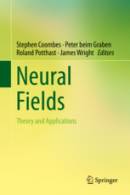
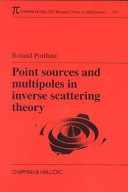
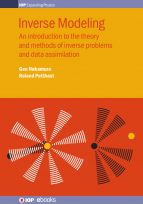
Recent publications can be found on publications. A book Inverse Modeling by Nakamura and Potthast with an introduction into data assimilation and inverse problems has recently appeared at IOP.
Working in an operational center, our focus is to develop state-of-the-art high-dimensional analysis and simulation methods which can be run in a reliable way on a supercomputer in near real-time. It includes codes simulating atmospheric processes, fluid-dynamics, physical parametrizations, scattering of waves, propagation of light and radiation, tomography, large-scale optimization and uncertainty quanitfication, ensemble and particle methods.
With a SX-Aurora TSUBASA C401-8 of NEC our supercomputers at Deutscher Wetterdienst are no 101 and no 136 (June 2024) List on the TOP-500 Supercomputer List. We have access to Cray XC40, Xeon E5-2695v4 of ECMWF, Mistral - bullx DLC 720, Xeon E5-2680v3 12C of DKRZ and Piz Daint - Cray XC50, Xeon E5-2690v3 12C 2.6GHz, Aries interconnect, NVIDIA Tesla P100 of CSCS in Switzerland.
High-performance computing is our daily business, however, the development of insight into the scientific problems we need to solve is an indispensable ingredient of our daily work. Part of this insight is based on mathematical analysis and the testing of computational methods for purpuse-built small-scale demonstration systems.
Editorial Board And Steering Committees
- Steering Committee (STC) COSMO Consortium COSMO Structure
- Steering Committee ICON Consortium https://icon-model.org (2020-2025)
- Steering Committee German national Earth System Modeling natESM Steering
- Programme Manager EUMETNET Programme Artificial Intelligence for Weather, Climate and Environmental Applications WMO Announcement
- Steering Committee High-Performance Computing Center Stuttgart https://www.hlrs.de/, HLRS
- National High-performance Computing (NHR) KIT representative Earth System Science https://www.scc.kit.edu/dienste/nhr.php
- National High-performance Computing (NHR) User Committee NHR User Committee
- Gauss Centre for Supercomputing Steering Committee https://www.gauss-centre.eu/, Gauss Steering Committee
Institutions
Prof. Dr. Roland Potthast
Deutscher Wetterdienst (DWD)
Frankfurter Strasse 135
63067 Offenbach, Germany
Roland.Potthast@dwd.de
Professor for Applied Mathematics
Department of Mathematics and Statistics,
Whiteknights, PO Box 220,
Reading RG6 6AX, UK
r.w.e.potthast@reading.ac.uk
https://twitter.com/roland_music